
School of Civil Engineering
Designing, building and maintaining the built environment — from buildings, bridges and highways to water resources and sanitation — through PEC-accredited, outcome-based engineering education.
Engineering the built environment
Civil Engineering is a professional engineering discipline that deals with design, construction and maintenance of man-made and naturally built environment, including but not limited to, construction of airports, buildings, bridges, canals, roads, railways, tunnels, water supply, water distribution, water resources management and sewerage & sewage treatment.
We at INU focus on interaction between the built environment and the natural world and recognize that civil engineering is crucial to meet the major challenges faced by our society; including climate change, economy recovery, growing population and urbanization, conservation of natural resources, development of renewable energy, suitable transport, environmental quality and infrastructure ageing and resilience.
Civil Engineering School was established in 2010. The School is accredited as per PEC's OBE based learning module under level 2 Washington Accord. The ever evolving undergraduate program in civil engineering aims towards ingraining leadership skills, a strong sense of professionalism and ethical responsibilities in the future engineers, and prepare them to engage in lifelong eruditeness. Our school is affiliated with the prestigious Pakistan Engineering Council (PEC).
The school of civil engineering will excel in undergraduate and graduate instruction in conformity with HEC and PEC, in training, research and design in all sub areas of civil engineering, and in service to the public, consistent with the mission of University. Advancing the mechanics of Civil and structure engineering systems within the broader context of the design, construction and operation of sustainable of the infrastructure and the geology of earth's resources and environment.
The mission of school of Civil Engineering is to educate, inside and outside the classroom and to provide services to the university, engineering profession, and the public. To offer undergraduate and postgraduate degree programs in the breadth, width, and depth areas of infrastructure and construction engineering proficiencies. A stringent groundings in fundamentals using mathematics and engineering principles as a tool to support understanding and develop new concepts, employing fundamentals mechanics, incorporating uncertainty, and channelizing the conflicting the objectives inherent in successful civil engineering research and design.
Accredited by the Pakistan Engineering Council under Level II of the Washington Accord, following PEC's outcome-based education module.
Education beyond the classroom
It is my privilege to welcome you to the School of Civil Engineering. Civil Engineering is a vital discipline that contributes significantly to infrastructure development, economic growth, and societal well-being. Our School is committed to producing competent engineers equipped with the knowledge, skills, and professional ethics required to meet modern engineering challenges.
At our School, education goes beyond the classroom. We strongly emphasize practical learning by providing field exposure through industrial linkages, site visits, internships, and collaboration with industry professionals. This approach enables our students to bridge the gap between theoretical concepts and real-world engineering practices.
Three degrees, one engineering pathway
Select a program to view its overview, credit-hour structure, published scheme of studies and admission eligibility.
MS Civil Engineering
Higher education (Postgraduate Degree) in Civil Engineering is paramount to opening doors that are not otherwise accessible. These opportunities include research positions at corporation's levels. A career at this level enables to achieve satisfaction through exploration of one's own ideas and skills. Postgraduate degree in civil engineering allows civil engineers to expand their knowledge towards problem solving, accepting new challenges and playing due role in the development of humanity.
Realizing the importance of postgraduate studies, coping up with new challenges of modern construction trends and the need for continuing education in the current environment, Iqra National University launched MS Program in civil engineering capitalizing upon the already established state of the art infrastructure for undergraduates studies at its existing campus.
Areas of Specialization
Credit-Hour Structure — 32 CH
- Major/Core Courses618
- Elective Courses26
- Research Thesis66
- Fehm e Quran-I / Rights of Minorities in Islam-I11
- Fehm e Quran-II / Rights of Minorities in Islam-II11
- Advance Research Methodology for Civil Engineers13
- Artificial Intelligence Fundamentals (Theory)13
- Total1232
- Major/Core Courses824
- Elective Courses26
- Fehm e Quran-I / Rights of Minorities in Islam-I11
- Fehm e Quran-II / Rights of Minorities in Islam-II11
- Advance Research Methodology for Civil Engineers13
- Artificial Intelligence Fundamentals (Theory)13
- Total1232
Course Catalogue
- CE-501Construction Project Administration3 CH
- CE-502Construction Law and Practice3 CH
- CE-503Safety Management in Construction3 CH
- CE-504Environmental Health & Safety3 CH
- CE-505Transportation Planning & Management3 CH
- CE-506Building Construction & Design3 CH
- CE-507Civil Engineering Design & Management3 CH
- CE-508Building Services & Engineering Systems3 CH
- CE-509Human Resources Management in Construction3 CH
- CE-510Operation Management3 CH
- CE-601Construction Project Engineering (Planning & Control)3 CH
- CE-602Construction Financial Management3 CH
- CE-603Automated Construction Management3 CH
- CE-604Disaster & Risk Management in Construction3 CH
- CE-605Advanced Construction Cost Estimating & Control3 CH
- CE-606Advanced Construction Management3 CH
- CE-607Total Quality Management3 CH
- CE-608Principles of Design & Construction3 CH
- CE-609Highway Construction Management3 CH
- CE-610Energy Resource Planning & Management3 CH
- CE-611Construction Materials Management3 CH
- 1.16 years of schooling or 4 years education after HSSC / A'level in relevant discipline with minimum CGPA of 2.0 out of 4.0.
- 2.GAT with minimum 50% cumulative score, or 60% marks in university-based test.
- 3.Minimum duration 2 years; maximum 4 years or as per HEC policy.
The eleven graduate attributes
An ability to apply knowledge of mathematics, science, engineering fundamentals and an engineering specialization to the solution of complex engineering problems.
An ability to identify, formulate, research literature, and analyze complex engineering problems reaching substantiated conclusions using first principles of mathematics, natural sciences and engineering sciences.
An ability to design solutions for complex engineering problems and design systems, components or processes that meet specified needs with appropriate consideration for public health and safety, cultural, societal, and environmental considerations.
Conduct investigation of complex engineering problems using research-based knowledge and research methods, including design of experiments, analysis and interpretation of data, and synthesis of information to derive valid conclusions.
An ability to create, select and apply appropriate techniques, resources, and modern engineering and IT tools, including prediction and modeling, to complex engineering activities, with an understanding of the limitations.
Analyze and evaluate sustainable development impacts to society, the economy, sustainability, health and safety, legal frameworks, and the environment while solving complex engineering problems.
Apply ethical principles and commit to professional ethics and norms of engineering practice and adhere to relevant national and international laws. Demonstrate an understanding of the need for diversity and inclusion.
Function effectively as an individual, and as a member or leader in diverse and inclusive teams and in multi-disciplinary, face-to-face, remote and distributed settings.
Communicate effectively and inclusively on complex engineering activities with the engineering community and with society at large, such as being able to comprehend and write effective reports and design documentation, and make effective presentations, taking into account cultural, language, and learning differences.
Demonstrate knowledge and understanding of engineering management principles and economic decision-making and apply these to one's own work, as a member and leader in a team, to manage projects in multidisciplinary environments.
Recognize the need for, and have the preparation and ability for i) independent and life-long learning ii) adaptability to new and emerging technologies and iii) critical thinking in the broadest context of technological change.
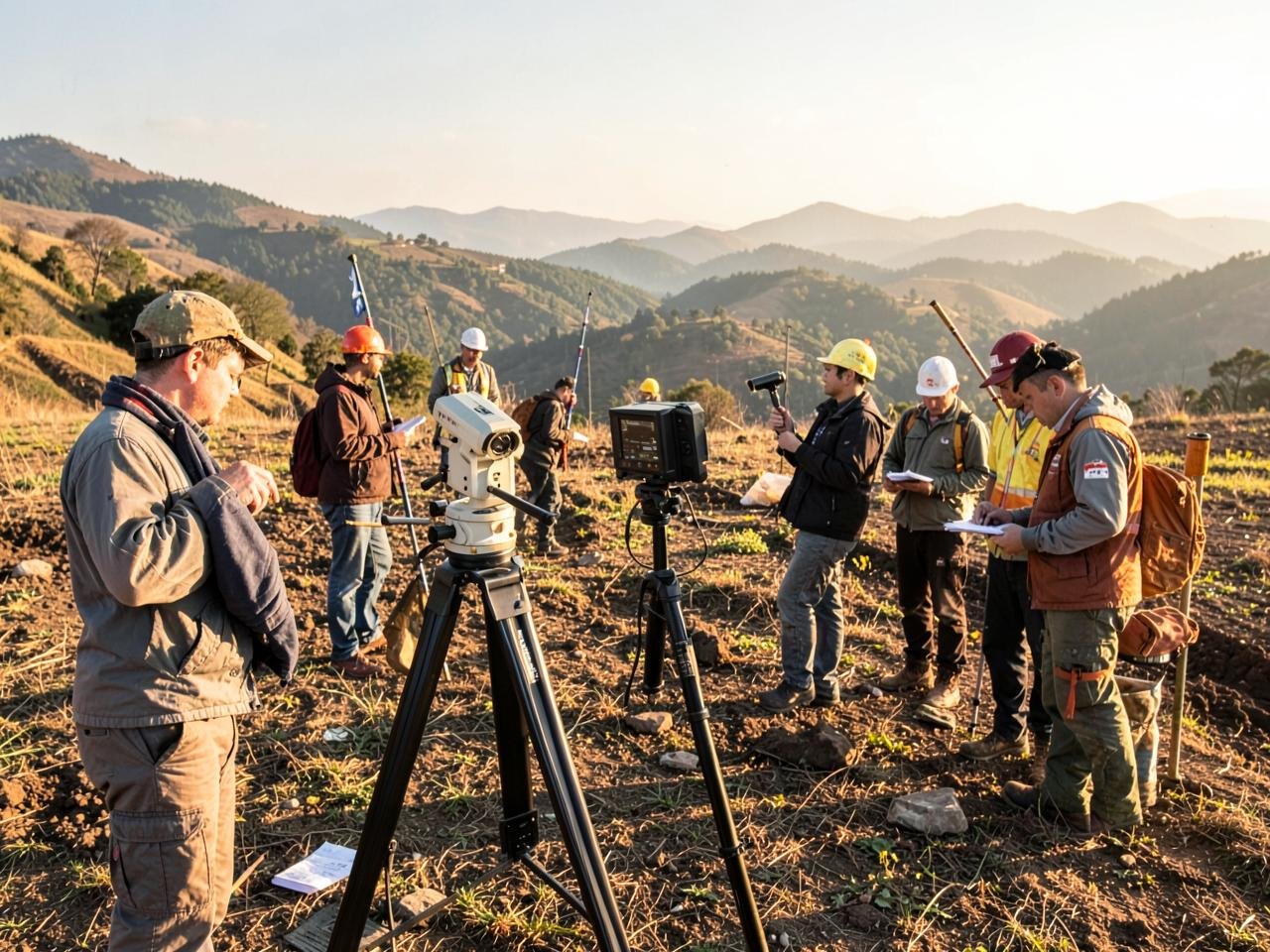
Survey Camp
A three-week field and plotting exercise, and a pre-requisite for the award of the BSc Civil Engineering degree.
All students are required to have secured a "PASS" grade in Engineering Surveying and Advanced Engineering Surveying.
3 weeks — 2 weeks of field work and one week of plotting work.
Group Instructor 60% · In-Charge Survey Camp 40%.
A maximum of 6 students per group, subject to the approval of the In-Charge Survey Camp.
Survey camp is a pre-requisite for the award of degree and a certificate will be issued to students passing survey camp by chairman of School. A viva will be conducted at the end of survey camp. Students who do not appear, or who secure a "FAIL" grade, will not be allowed the award of degree until they reappear in the next term and secure a "PASS" grade.
Engineers, researchers and practitioners
12 faculty members and 3 lab engineers teaching across structural, geotechnical, transportation, environmental and construction engineering.
Laboratory Engineers
Graduates in public service
Civil Engineering alumni who cleared the Khyber Pakhtunkhwa Public Service Commission examinations.
Selected as Sub Divisional Officer (SDO) at Communication and Works Department through KPPSC
Selected as Sub Divisional Officer (SDO) at Communication and Works Department through KPPSC
Selected as Sub Divisional Officer (SDO) at Public Health Engineering through KPPSC
Ranked 1st position in KPPSC and selected as Sub Divisional Officer (SDO) at Communication and Works Department
Where our graduates go
Currently I am working as Sub divisional Officer at Communication and Work Department KPK. I can confidently say that my education at Iqra National University was instrumental in preparing me for the challenges of the real world. In addition to the excellent academic program, Iqra National University also provided me with numerous opportunities to gain practical experience through internships, research projects, and extracurricular activities. These experiences allowed me to apply the knowledge and skills I had learned in the classroom to real-world scenarios, and gave me a competitive edge when it came time to enter the workforce. Overall, I highly recommend Iqra National University to anyone seeking a comprehensive education in civil engineering.
First of all, thanks to Almighty Allah, the most merciful and beneficent of all, as this success in my life is not possible without the prayers of my parents and teachers. I had done BSc and MS in Civil engineering from Iqra National University, Peshawar. Currently I am working as Sub divisional Officer at Communication and Work Department KPK. The management staff and faculty of Iqra National University are very friendly and hardworking and guided us at every step. Iqra National University plays a key role in my career building.